Community Not Commodity

H.O.M.E. Tour II

We recently took a short tour of a few expensive, incompatible H.O.M.E.  projects so we could all get a feel for what the ordinance actually allows.    We want to share a few more of these projects.   We have also mapped the H.O.M.E. projects to show where they are currently located.

Let’s continue the tour to see if these H.O.M.E.s would fit in next to your house.

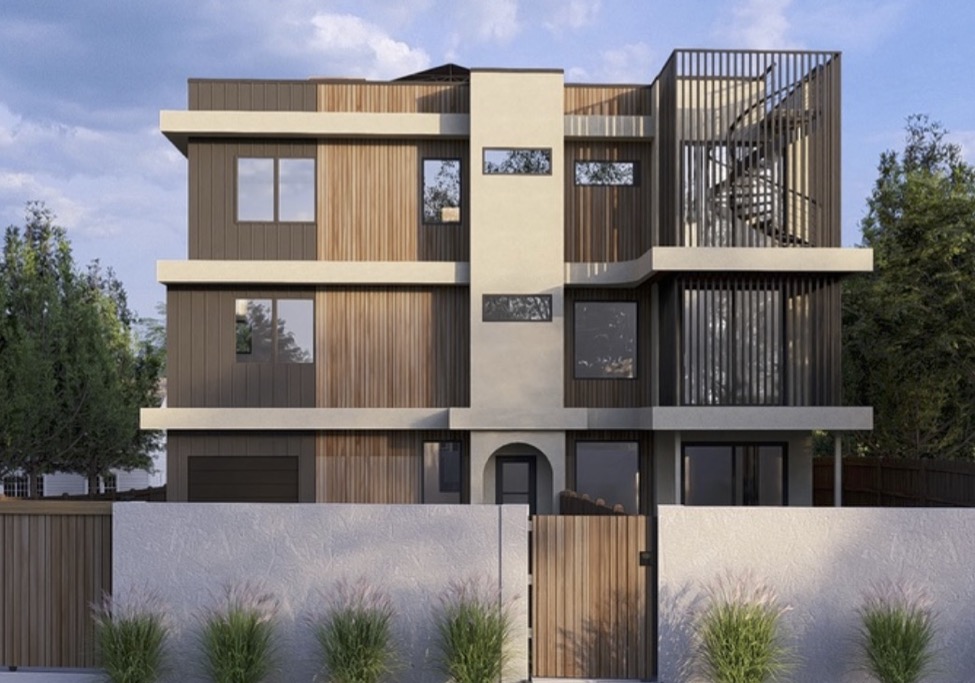
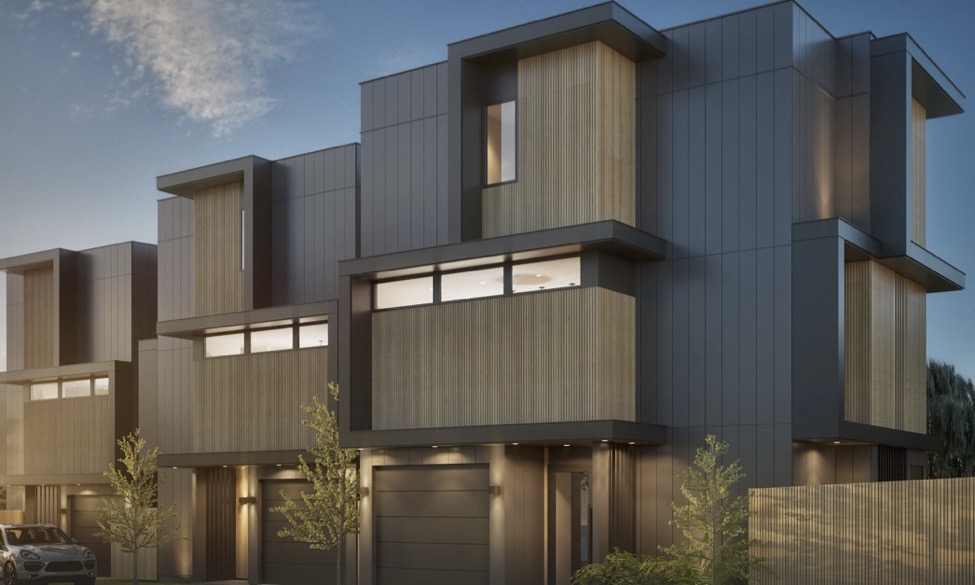
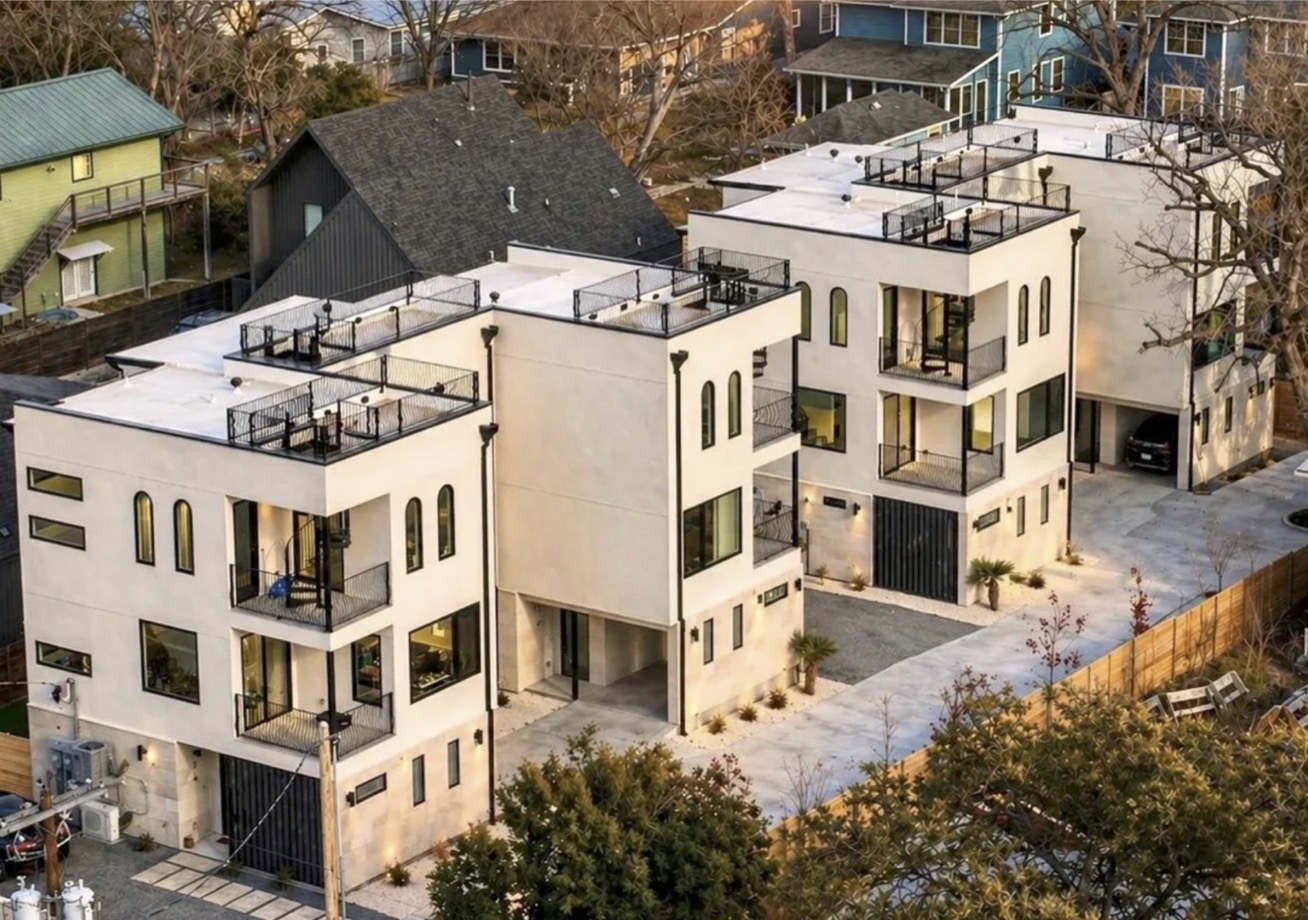
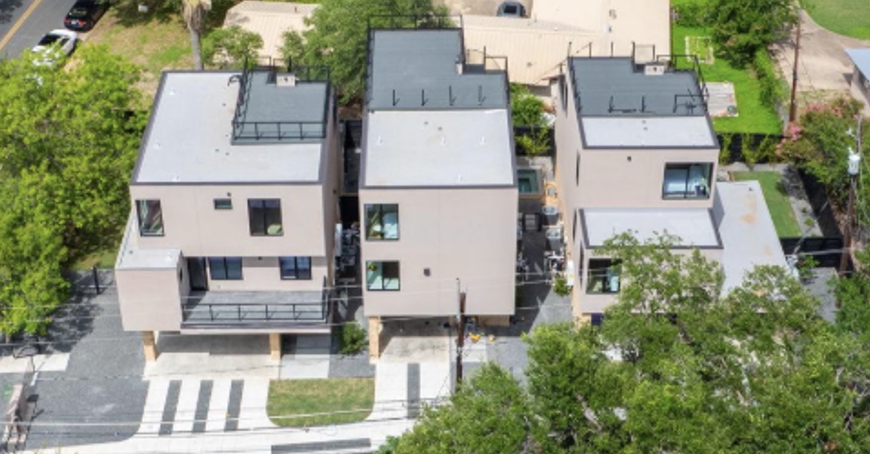
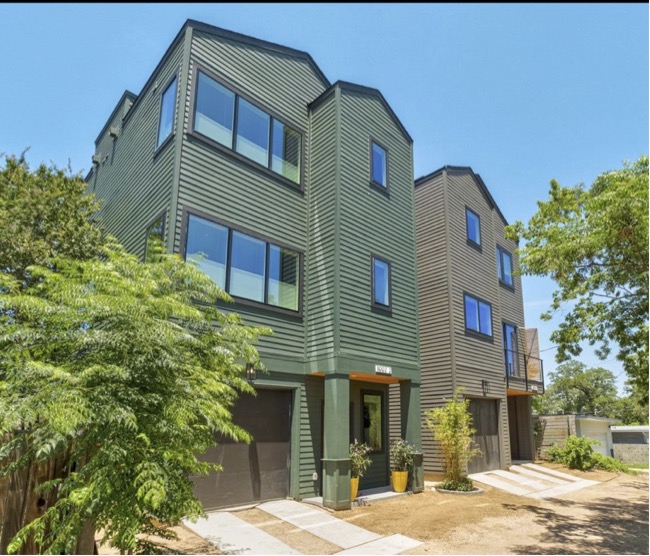
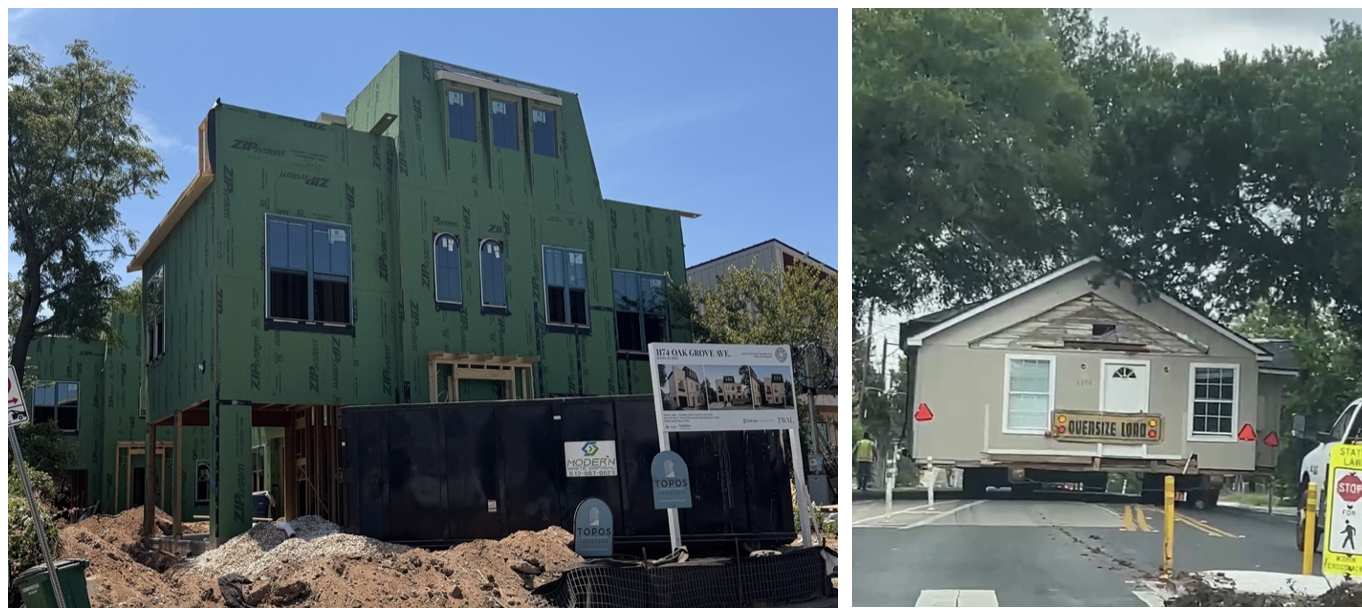
First Stop.  Here are three units built under H.O.M.E. on a (SF-3) lot in East Austin.  A modest, affordable house was towed away to make way for this luxury “price upon request” trio of units.    Which looks more affordable?

Second Stop. These 3 units are located in Bouldin Creek, each with its own heated pool.  Unit 2 (smaller unit) is offered at $1,299,000.    Before the City quietly changed the H.O.M.E. acronym, it stood for Home Opportunities for Middle-Income Empowerment. But the developer did not have middle-income housing in mind: “Welcome to luxury living in Bouldin.”  That luxury living is in a “fully gated compound” with a “crown jewel 4th floor rooftop deck” which is “engineered to accommodate a cold plunge and sauna.”

Our third stop stays in Bouldin Creek, where three units – each 1,450 sf in size and with a pool – are marketed at $1.3 million apiece. Nothing reflects “middle-income empowerment” like a $1.3M H.O.M.E. with a private pool.

While not every H.O.M.E. development is prohibitively expensive or grossly incompatible, the point is that any regulation or standard that would keep them from being so was stripped away or omitted in deference to the profit-driven market. Had the City wanted to promote affordable housing, or even middle-income housing, it could have restricted the size of H.O.M.E. units, prohibited luxury features like pools, and required that any third unit be justified through affordability guarantees rather than granted automatically. Instead, it gifted these entitlements to investors and developers, allowing them to maximize their profits.

Unfortunately, the City is just getting started.  They want to extend the breadth and reach of  H.O.M.E.  in early December. The City is right now considering more units on lots, extending mixed-use buildings from corridors into residential neighborhoods, and allowing small buildings in the front yards of single-family homes to operate as small retail stores. Instead of continuing to undermine neighborhoods, the City should reform H.O.M.E.

To be continued.

H.O.M.E. – It Doesn’t Add Up

Last time, we took a short tour of a few expensive, incompatible H.O.M.E.  projects so we could all get a feel for what the ordinance actually allows. But we also wondered how many H.O.M.E. projects have been permitted and built in the two and one-half years since February 5, 2024 — and where they are located.

As a reminder, the Austin City Council adopted an ordinance allowing up to three units on a standard 5,750‑square‑foot single‑family lot. The Council gave it the acronym H.O.M.E., standing for Home Opportunities for Middle-Income Empowerment. The Council passed an additional H.O.M.E. ordinance allowing standard-sized lots to be subdivided into 3 small lots, but today we are discussing only the first H.O.M.E. ordinance described above. It applied to permits filed on or after February 5, 2024.

The H.O.M.E. ordinance required the City Manager to provide the Council with detailed reports at six-month intervals during the first year and one-half, and annually thereafter. Under the reporting requirements, the information we sought should be readily available. It is not. The City published its first and only report in November 2025. However, an expert analysis of that report found it to be “misleading, spinning the data into a success story, when in reality, HOME has made demolitions more common in infill projects, has shifted development more towards neighborhoods vulnerable to displacement, and has not incentivized the preservation of affordable housing.” (emphasis added). 

Because the City of Austin does not provide reasonably accessible or current public information on H.O.M.E. projects, we had to conduct our own review—a review made more difficult by the City’s uneven data collection and user‑unfriendly access. We methodically examined City of Austin building and demolition permits, accounting for the City’s errors and information gaps along the way, and cross‑checked those permits with the data the City provided to The Austin Free Press for its article Sidelined: Key HOME reforms bypass lower-income Austinites.

We reached three conclusions. First, the City has not collected or retained H.O.M.E. data in a disciplined way that would allow it to reliably meet the ordinance’s reporting requirements or to allow interested parties to fully rely upon any report issued based on that data.  Second, the available data is nonetheless consistent with expert findings that the areas of heaviest saturation of H.O.M.E. projects include neighborhoods vulnerable to displacement. Third, H.O.M.E. projects also intrude into neighborhoods across the city, including many three-story structures in areas previously protected by the McMansion Ordinance. That ordinance was written to prevent massive incompatible structures, such as those depicted in our H.O.M.E. Tour, from replacing more compatible neighborhood housing.

Among the City’s data problems: inconsistent labeling of projects as H.O.M.E.; counting multi‑unit projects as H.O.M.E. even though they were in zoning districts where H.O.M.E. does not apply; including projects with withdrawn or expired permits or permits that pre‑dated H.O.M.E.; counting two‑unit projects as H.O.M.E. without documentation that they could only have been built under H.O.M.E.; treating non-residential structures, such as saunas and pool houses, as housing units, and omitting as H.O.M.E. projects some three‑story projects that, because of their location, could only have been legally built under H.O.M.E.

In the end, we identified 649 residential addresses where ostensible H.O.M.E.-related permits were issued.  We found that 483 H.O.M.E. permits (as of September 2026) have been finalized.  The records on their face do not allow us to report how many units those permits represent.   There is reason to question whether the City knows that information.

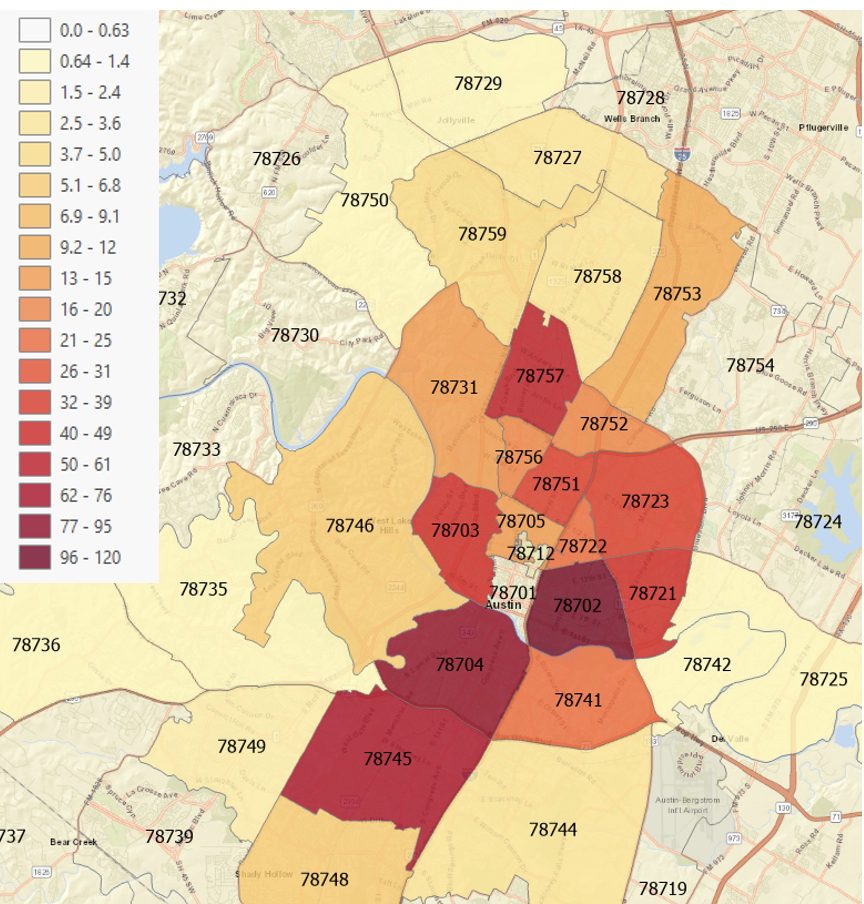
Here is a “heat map” of the ZIP code locations of the addresses where we found apparent H.O.M.E. permits. This map reveals the relative levels of H.O.M.E. projects.
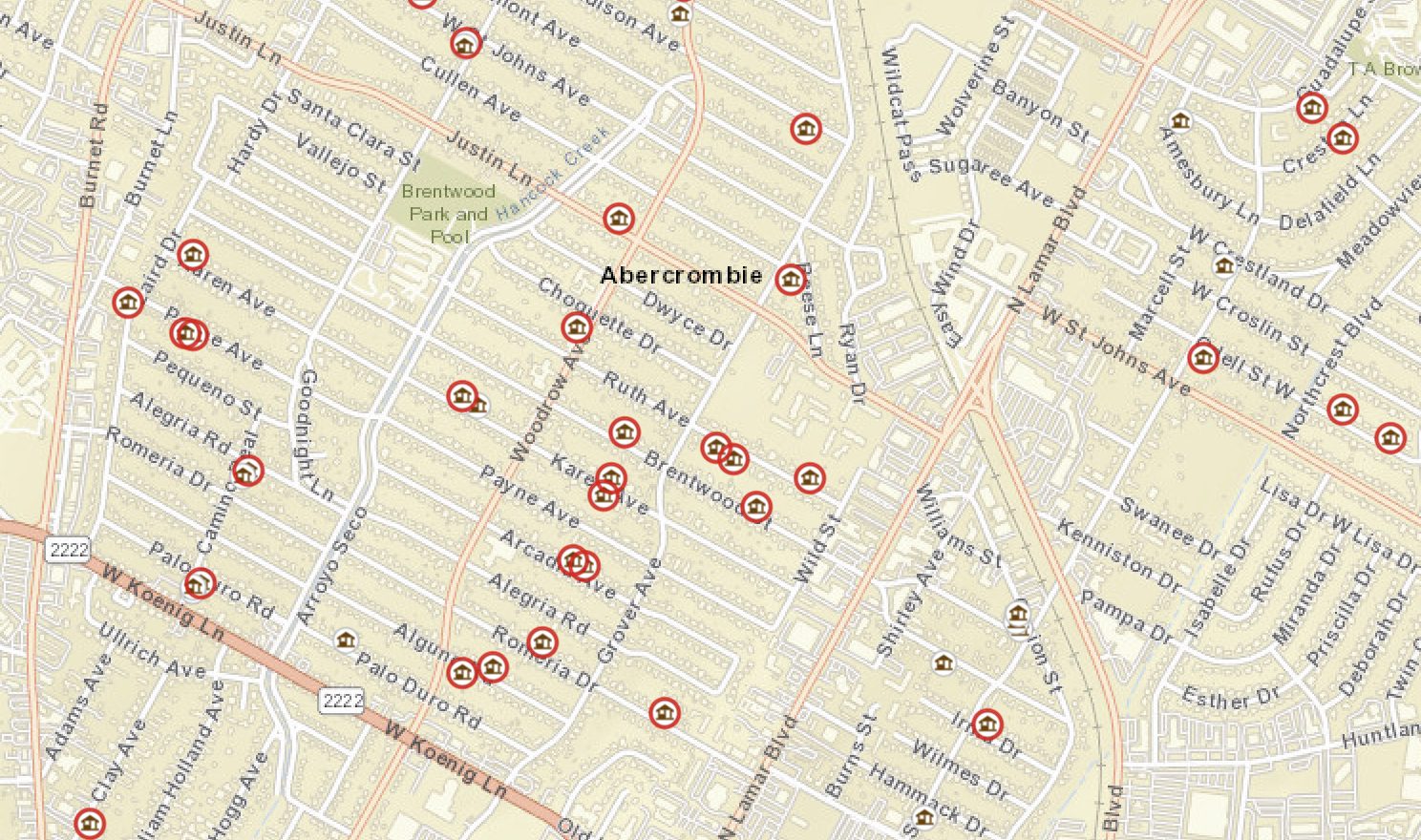
Finally, we created an interactive map that shows where the projects are (home symbols), identifies which ones are linked to a demolition permit (red circles), and lets you view all the details by clicking a home symbol to bring up a full project table.  If you think we missed a project, tell us the address and let us know here.
To date, H.O.M.E. 1 has produced expensive, incompatible housing, much of which was preceded by the demolition of more affordable, compatible housing. After a year and one-half of market-driven profit-taking, H.O.M.E. must be reformed to, among other things, shrink unit size to better produce more affordable, compatible housing and prevent the market-driven abuses that disrupt neighborhoods and make them more expensive.  To fulfill its reporting obligations under the ordinance, the City must reform its record-keeping so the data is accurate, current, and publicly available.

To be continued.
H.O.M.E. Tour

On December 7, 2023, the Austin City Council adopted an ordinance allowing up to three units on a standard 5,750‑square‑foot single‑family lot. The Council gave it the acronym H.O.M.E., standing for Home Opportunities for Middle-Income Empowerment. On May 16, 2024, the Council adopted Phase 2, reducing the minimum lot size to 1,800 square feet and enabling a standard lot to be subdivided into three separate lots, each capable of supporting one home.

Confronted with the reality that neither phase of H.O.M.E. offered a realistic path for middle-income residents to purchase a home, the City quietly, without public explanation, redefined the acronym as Home Options for Mobility and Equity. Never mind that H.O.M.E. is not tied to transit stations or even bus stops and has no affordability component or non-displacement safeguards that equity demands. The Ministry of Truth at work.

Whatever the acronym, the City touts three units as “missing middle” housing that “can provide greater affordability and be more easily attainable by moderate-income families and individuals compared to new single-family homes by spreading the cost of the land across more units,” all while “fitting within residential neighborhoods.”

Let’s take a tour to see if these H.O.M.E.s would fit in next to your house.


First Stop.  Here are six units built under H.O.M.E. on a re-subdivided  (SF-3) lot in the Brentwood neighborhood. They were originally marketed with the hook “the income potential of this property is limitless – short term rental, corporate rentals or Airbnb.”  They are now “temporarily off market” but were initially listed at over $1 million each, prices inconsistent with “middle‑income” or “greater affordability.” The apparent lack of vegetation indicates impervious cover at a level inconsistent with residential compatibility and indifferent to the importance of Austin’s tree canopy in reducing local heat islands.


Second Stop. Our next stop is a three-unit H.O.M.E. development in Barton Hills. It replaced a 2,000‑square‑foot home with mature trees on a large lot with three new houses, each between 2,500 and 3,100 square feet. Marketed as just “steps away” from Barton Springs Pool, each home was listed at between $2 million and $2.5 million and has its own  swimming pool. Unaffordability aside, the reader can decide whether the size and design of this “missing middle” housing “fits” within the neighborhood.


Third Stop. An east Austin neighborhood with towering   H.O.M.E. units. The “missing middle” unit shown was listed at the “greater affordability” price of $1,000,000. Where did the cost savings from a lower per-unit land cost go?

Not every H.O.M.E. development is prohibitively expensive or grossly incompatible, but the point is that any regulation or standard that would keep them from being so was stripped away or omitted in deference to the profit-driven market. Had the City wanted to promote affordable housing, or even middle-income housing, it could have restricted the size of H.O.M.E. units or required the third unit to be justified through affordability guarantees rather than gifted to investors and developers to increase their profits.

Had the City cared whether a “missing middle” H.O.M.E. development “fit” within residential neighborhoods, it would not have wholly eliminated existing design standards and would not have granted a third unit as a matter of right. Instead, it would have required that additional units be shown to be – not identical to existing single-family homes – but at least not pointedly incompatible with them and, not indifferent, even hostile, to the input of the community. Families and individuals expected their representatives to protect them from the excesses of the market rather than green lighting those excesses.  These developments will bring residents higher taxes on their land and devalue their homes at the same time, ripening communities for more high-profit development opportunities.

Unfortunately, the City is just getting started.  They want to extend the breadth and reach of  H.O.M.E.  in early December. The City is right now considering more units on lots, extending mixed-use buildings from corridors into residential neighborhoods, and allowing small buildings in the front yards of single-family homes to operate as small retail stores. Instead of continuing to undermine neighborhoods, the City should reform H.O.M.E.

To be continued.

Charter Amendments Chart a less Democratic Austin

The charter is the fundamental governing law for a home-rule city.  Under state law, any charter amendment must be approved by a majority of the city’s qualified voters participating in an election held specifically for that purpose, which in this case will occur in November 2026.  State law also limits charter amendments to no more than once every two years.

The city council had originally planned to place these amendments on the November 2024 ballot, but that effort was derailed when the council was found to have violated the Texas Open Meetings Act.

Public hearings on the City of Austin’s proposed charter amendments will be held this week on Tuesday, July 28, and Thursday, July 30. The city has posted a short synopsis of the proposed charter amendments, along with council‑initiated amendments, as part of the meeting materials.

These are the most concerning charter amendments:

Amendment 3(Item C)– This amendment eliminates the requirement that the Council set its meeting rules by ordinance, thereby eliminating the necessity of public input on the proposed meeting changes. The importance of a public hearing was demonstrated when the Council attempted to illegally reduce effective speaking times, thereby  limiting citizen communication. The public airing and the ordinance requirement provided the opportunity for the changes to be successfully challenged in court.   This charter amendment would undermine those protections.

Amendment 12 – (Item L) This amendment allows City Council members to solicit and accept political contributions to retire campaign debt while they are still in office, rather than waiting until they are out of office.  This was the only amendment proposed by the City Council (and not the Charter Review Commission). We understand why special interests like paying council members after they have been elected, but don’t understand why that should be allowed.

Amendment 5  -(Item E) This amendment limits elections for initiatives or charter changes that result from citizen petitions to the next November of an even year.  This can result in a unduly long wait for a vote after a citizen petition is validated because of the additional state law requiring two years between charter amendment votes. The Austin Independent demonstrates how delaying the vote can undermine the initiative.

The following amendments are also concerning:

Amendment 1  -(Item A) This amendment eliminates or modifies terms in the Charter designed to keep the redistricting commission independent.  It removes the prohibition of communication with anyone outside of a public hearing and allows council and city staff to interact with the “independent” redistricting commission.

Amendment 6 – (Item F) Recall of a Council member currently requires a petition of at least 10% of registered voters in the district followed by a recall election.  This amendment would change the threshold to 15%.    A 15% requirement, makes a recall petition more expensive, favoring a person or organization with deep pockets, instead of grassroots efforts.

At their meeting on July 30, 2026 the Austin City  Council made the decision to place these charter amendments on the ballot: Items A,  B, C, D, E, G, K and M.

Public Amendments.

The council says it will consider charter amendments from the public. One amendment that Austin desperately needs is an independent Ethics Commission whose rulings can be enforced.

The Dog’s Head Night Train

An area east of Austin known as “Dog’s Head,” because of its shape formed by the Colorado River, has been in the news. Residents were surprised to learn in May that the 2,600‑acre Dog’s Head property was set to be annexed and developed. As reported by the Austin Current, some residents didn’t learn the details, including disturbing maps appearing to show new roads going through their living rooms, until May 19th.  By May 21, the City had annexed the property and approved a development agreement — a project the developer had reportedly been working on for seven years ( pg 90), and key city staff had known about for months but failed to make public.  Needless to say, there are concerns with process and substance.

Unusual approval speed and unjustified secrecy:

  • The developer defended the rushed decision on the grounds that an unnamed Fortune 100 “advanced manufacturing facility” wanted to get started right away. The company has not been revealed, but indeed, within a few days of the annexation, heavy equipment was seen leveling the land.
  • Information is being withheld from the public under a non-disclosure agreement signed by the Council and reported in a story on Dog’s Head by the Austin Free Press.

Significant environmental and fiscal impacts:

Serious environmental justice questions:

  • Neighborhoods around the project have long experienced environmental discrimination and disinvestment. The census tract (23.10) where the proposed development is located has 3,251 residents, a median income of $36,991, and an 89% Hispanic population.

Conclusion

The details remain murky, but what is clear is that this deal was largely shaped out of public view and backed by the Mayor and City Council. City staff even issued a report calling it a “once‑in‑a‑lifetime economic opportunity.” Yet with most of the revenue captured inside the development itself, the obvious question is: whose once‑in‑a‑lifetime opportunity will it be?

TIRZ Hearing Dates and opportunities for input: