Last time, we took a short tour of a few expensive, incompatible H.O.M.E. projects so we could all get a feel for what the ordinance actually allows. But we also wondered how many H.O.M.E. projects have been permitted and built in the two and one-half years since February 5, 2024 — and where they are located.
As a reminder, the Austin City Council adopted an ordinance allowing up to three units on a standard 5,750‑square‑foot single‑family lot. The Council gave it the acronym H.O.M.E., standing for Home Opportunities for Middle-Income Empowerment. The Council passed an additional H.O.M.E. ordinance allowing standard-sized lots to be subdivided into 3 small lots, but today we are discussing only the first H.O.M.E. ordinance described above. It applied to permits filed on or after February 5, 2024.
The H.O.M.E. ordinance required the City Manager to provide the Council with detailed reports at six-month intervals during the first year and one-half, and annually thereafter. Under the reporting requirements, the information we sought should be readily available. It is not. The City published its first and only report in November 2025. However, an expert analysis of that report found it to be “misleading, spinning the data into a success story, when in reality, HOME has made demolitions more common in infill projects, has shifted development more towards neighborhoods vulnerable to displacement, and has not incentivized the preservation of affordable housing.” (emphasis added).
Because the City of Austin does not provide reasonably accessible or current public information on H.O.M.E. projects, we had to conduct our own review—a review made more difficult by the City’s uneven data collection and user‑unfriendly access. We methodically examined City of Austin building and demolition permits, accounting for the City’s errors and information gaps along the way, and cross‑checked those permits with the data the City provided to The Austin Free Press for its article Sidelined: Key HOME reforms bypass lower-income Austinites.
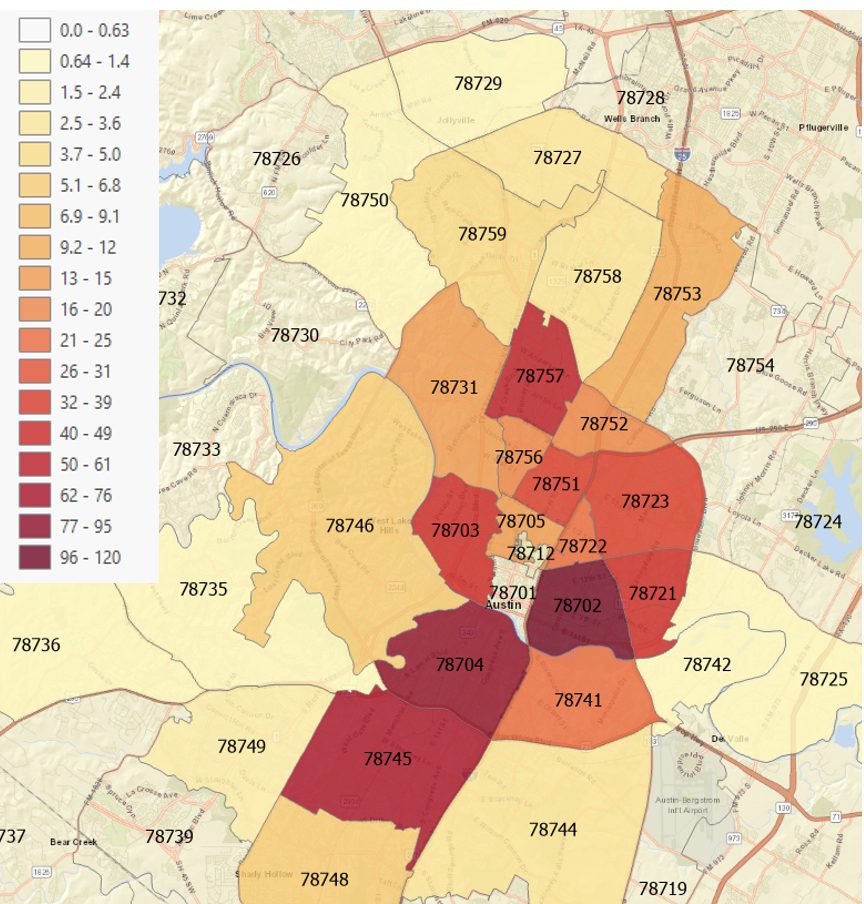
We reached three conclusions. First, the City has not collected or retained H.O.M.E. data in a disciplined way that would allow it to reliably meet the ordinance’s reporting requirements or to allow interested parties to fully rely upon any report issued based on that data. Second, the available data is nonetheless consistent with expert findings that the areas of heaviest saturation of H.O.M.E. projects include neighborhoods vulnerable to displacement. Third, H.O.M.E. projects also intrude into neighborhoods across the city, including many three-story structures in areas previously protected by the McMansion Ordinance. That ordinance was written to prevent massive incompatible structures, such as those depicted in our H.O.M.E. Tour, from replacing more compatible neighborhood housing.
Among the City’s data problems: inconsistent labeling of projects as H.O.M.E.; counting multi‑unit projects as H.O.M.E. even though they were in zoning districts where H.O.M.E. does not apply; including projects with withdrawn or expired permits or permits that pre‑dated H.O.M.E.; counting two‑unit projects as H.O.M.E. without documentation that they could only have been built under H.O.M.E.; treating non-residential structures, such as saunas and pool houses, as housing units, and omitting as H.O.M.E. projects some three‑story projects that, because of their location, could only have been legally built under H.O.M.E.
In the end, we identified 649 residential addresses where ostensible H.O.M.E.-related permits were issued. We found that 483 H.O.M.E. permits (as of September 2026) have been finalized. The records on their face do not allow us to report how many units those permits represent. There is reason to question whether the City knows that information.
Here is a “heat map” of the ZIP code locations of the addresses where we found apparent H.O.M.E. permits. This map reveals the relative levels of H.O.M.E. projects.
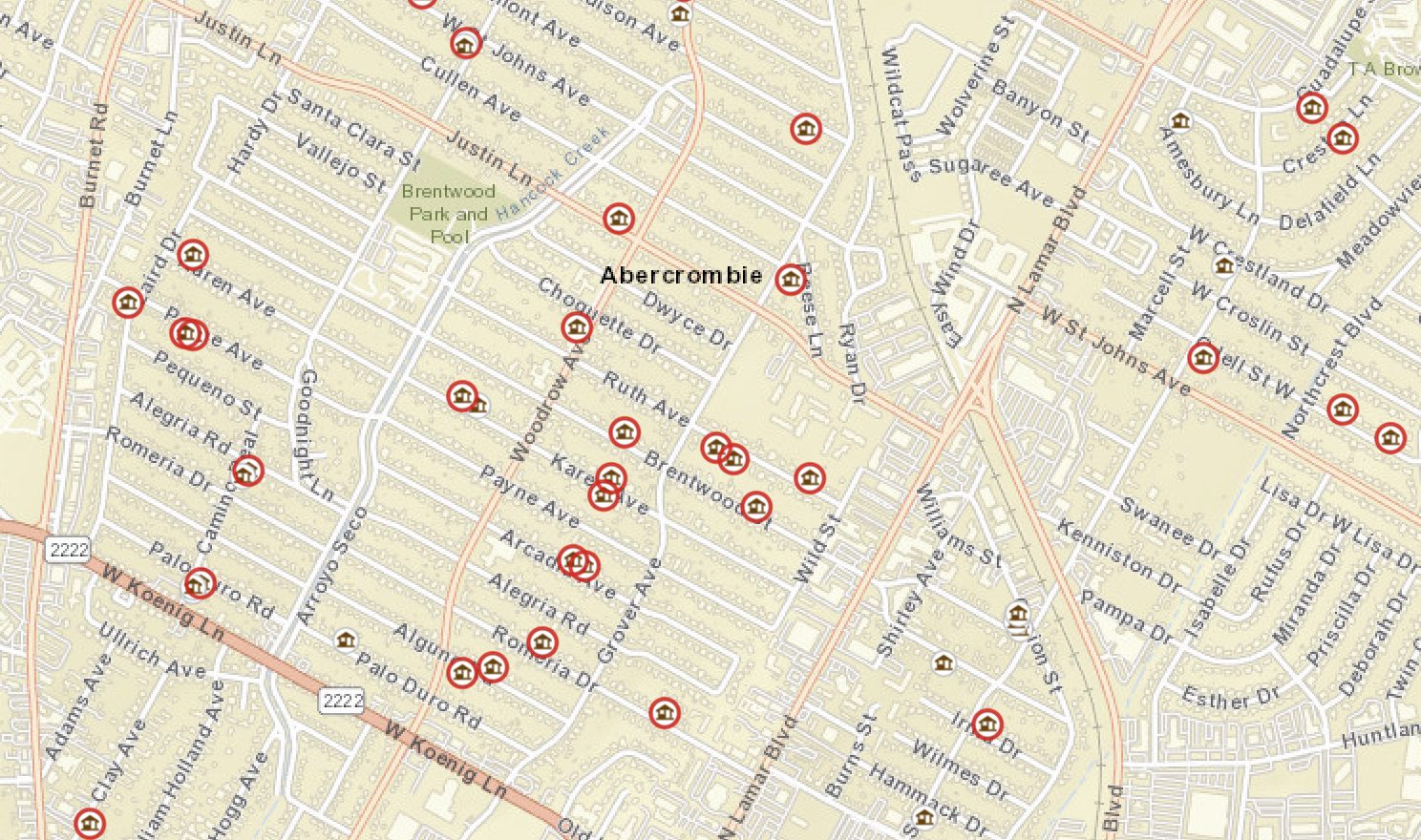
Finally, we created an interactive map that shows where the projects are (home symbols), identifies which ones are linked to a demolition permit (red circles), and lets you view all the details by clicking a home symbol to bring up a full project table. If you think we missed a project, tell us the address and let us know here.
To date, H.O.M.E. 1 has produced expensive, incompatible housing, much of which was preceded by the demolition of more affordable, compatible housing. After a year and one-half of market-driven profit-taking, H.O.M.E. must be reformed to, among other things, shrink unit size to better produce more affordable, compatible housing and prevent the market-driven abuses that disrupt neighborhoods and make them more expensive. To fulfill its reporting obligations under the ordinance, the City must reform its record-keeping so the data is accurate, current, and publicly available.
To be continued.